
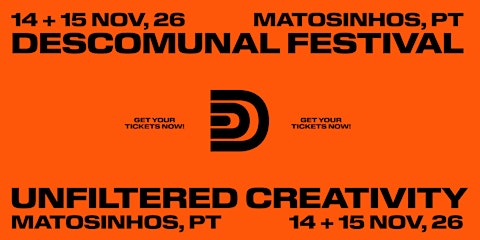
Descomunal Festival
Matosinhos, Portugal14 Nov 2026 – 15 Nov 2026
Dinamo Typefaces is an independent Berlin-based type design studio founded by Johannes Breyer and Fabian Harb. The studio develops retail and custom typefaces, design tools, and multiscript systems for clients across culture, fashion, technology, and commerce. Guided by research and experimentation, Dinamo also publishes books and physical projects while promoting fair, value-based font licensing. Notable collaborations include Spotify, Nike, Burberry, and the Institute of Contemporary Arts London. The studio’s work has received the Swiss Design Award, and its founders are members of AGI, reflecting Dinamo’s influence in contemporary type and design culture.
Works with ABC Favorit (31), ABC Diatype (15), ABC Whyte (11), ABC Monument Grotesk (7), ABC Ginto (3), ABC Marfa (3), ABC Arizona (3), Camera (2)
Their own site is set in ABC Monument Grotesk

Designers and creative leads attributed to Dinamo in press coverage.
Technologies detected on Dinamo's website.
Trondheim creative agency Skogen developed a new identity for GridScout, a Norwegian power-line sensor company whose devices detect risks including vibration, moisture, woodpecker damage and pole tilt. Rather than using familiar technology-brand cues, the system draws on scouting culture through a woodpecker-and-pin logo, merit-badge graphics, workwear and nature references, ABC ROM typography, and an olive-and-cream palette with high-vis alerts.
Emily Gosling reviews 20(Something)'s rebrand for Open Point, a civic software platform formed by merging Social Pinpoint and Consultation Manager. The identity combines a chiselled, Roman-inspired typographic approach, deep greens and purples, and a flexible open-point logo that works in both flat and animated 3D applications. The article praises its museum-like gravitas and warmth as an unexpected but effective fit for civic technology.
London-based Studio Lisca created the launch identity for River House, a design-led residential building company in Suffolk. The system combines a geometric brick-derived pattern with the movement of local rivers, deploying it across print, digital applications and signage. A pale blue and brick-red palette, alongside ABC Arizona Flare and Hanken Grotesk, gives the brand a contemporary alternative to conventional heritage-led construction branding.
Berlin-based Sonder Studio created the strategy, visual identity and verbal identity for VERITAS, the redevelopment of Wittenberge's former sewing-machine factory into a district for hotels, restaurants, offices and events. Drawing on the site's historic clock tower, the identity uses a circular clock-face logo, a custom Ulrich Sans wordmark, functional typography and a palette rooted in the town's industrial and architectural context.
The article covers the 2026 identity refresh for POV Budapest, Hungary’s first design conference, created by CM.SUPPLY in collaboration with COMET. Building on previous years’ visual systems, the new identity introduces motion and behavioural elements inspired by Hungarian modernists, maintaining its bold red-orange palette and typographic foundation.
Milan-based studio Velvele designed a brand identity for longevity brand Omnui, built around five core values expressed through a dot-based icon system. The identity merges organic and digital influences, using a warm 'Subtle Yellow' and 'Offline Black' palette and the ABC Favorit typeface by Dinamo. The result balances symbolism and clarity to reflect Omnui’s holistic approach to health and longevity.
The Brand Identity features Dinamo’s latest type release, ABC Schengen, a six-year collaboration with Seb McLauchlan and Luke Charsley. The type system merges Helvetica and Eurostile influences into 108 styles inspired by the Eurozone’s industrial and logistical aesthetics. The project explores the tension between functional design and cultural identity, resulting in a versatile, variable type family spanning multiple scripts.
Leo Design created the Holiday Detox Pack for Lake of Bays Brewing Co., a six-day beer set that visually represents a gradual reduction in alcohol content through blurred numerals. The Toronto studio used a custom Dinamo typeface, Leo Repro, and hand-treated each number to reflect increasing clarity. The minimalist packaging was initially a client gift and may expand into the brewery’s product line.
Dinamo has launched its first out-of-home print campaign for its Arizona typeface, featuring Berlin-based musician horsegiirL as the face of the project. The campaign, art directed by Dinamo and Veryes with photography by Tereza Mundilová, celebrates the re-release of Arizona with new condensed and compressed subfamilies. The project spans billboards, posters, and a fold-out type specimen inspired by teen magazines, blending music culture and typography in a playful, physical format.
BP&O features Studio Mut’s brand identity for Caffè Nazionale, a historic café in Arzignano, Italy, reopened as part of a local revitalisation project. The identity draws from vernacular Italian signage and dialect, using a custom handwritten typeface by Stefan Marx and Dinamo alongside Helvetica Neue. With a minimal black, white, and red palette and a griffin mascot, the design balances local authenticity and contemporary sophistication.
Barcelona-based studio Phantasia created the brand identity for Riad El Aaiún, a boutique hotel in Marrakech, by abstracting the city’s rooftop crenellations into a modular graphic system. The identity balances geometric precision with warmth through tactile materials and Dinamo’s ABC Arizona typeface. The result reflects the riad’s blend of traditional Moroccan architecture and contemporary sophistication.
Dinamo has launched ABC Schengen, a new auto- and industry-inspired typeface family designed by Seb McLauchlan with Luke Charsley. Six years in development, the project explores the visual language of European trade, transport, and manufacturing, resulting in 108 fonts and three companion revivals. The article delves into the design process, inspirations, and collaborative nature of the release.
The article explores MOUTHWASH Studio’s evolution of Seed’s brand identity, focusing on how to visualize the unseen world of microbes through design. Collaborating with type foundry Dinamo, the team developed Seed Sans, a variable typeface and expanded color system that balance scientific credibility with approachability. The refreshed identity reflects a broader shift toward adaptive, evidence-based branding in the health and science sector.
The Brand Identity interviews OpenAI Design Directors Shannon Jager and Cary Hudson following their talk at POV Budapest 2025. They discuss OpenAI’s recent rebrand, created in collaboration with Dinamo and Studio Dumbar, and explore how human craft remains vital in an age of AI-generated design. The conversation highlights the balance between technology and human creativity in shaping approachable, emotionally resonant design systems.
Village Green’s ‘Font Family’ project brings together type foundries to create screen-printed posters raising funds for War Child UK. Led by Tom Fearn, the initiative pairs contrasting typefaces to form playful, human-like compositions, celebrating collaboration and craft. The project involved multiple foundries, a specialist printer, and photographer Sun Lee, emphasizing tactile design and community spirit.
The Brand Identity features Emma Kaniuk & Company’s brand identity for Homeward Books, a small press dedicated to unconventional literature. Inspired by the hermit crab as a metaphor for ‘books without a home,’ the identity combines illustration, 3D design, and adaptable typography to express creativity and resilience. Collaborations with international illustrators and type foundries helped create a flexible, evolving visual system that has already elevated Homeward’s industry presence.
Studio Bruch reimagined the historic Hotel Old Post in Bad Hofgastein as the newly branded Post Post Hotel, embracing its postal heritage with a modern, playful identity. The project features a custom typeface, BR-Post, inspired by postage stamps, and illustrations by Daniel Triendl that bring warmth and character to the brand. The result is a refined yet contemporary rebrand that balances tradition with modern hospitality appeal.
Ragged Edge has unveiled a comprehensive rebrand that reinforces its founding ethos of 'rejecting average.' The new identity, built around the concept 'Never be the same again,' features a dynamic visual system called the Edge Spectrum, created using TouchDesigner and Cinema 4D. The rebrand introduces custom typography, warmer organic colors, and a partnership-focused philosophy that reflects the agency’s evolution and creative ambition.