Studio Blackburn is an international brand strategy and design studio based in London. Founded and led by Paul Blackburn, the studio blends strategic thinking with creative experimentation to craft brands that stand apart. The team, including Steph Wilkinson, Mark Jones, and Susie Blackburn, brings together expertise across identity, digital, and motion design. Their portfolio spans clients such as Trainline, So Energy, and the Olympic Museum, reflecting a balance of reason and play in every project. Studio Blackburn’s approach transforms complex ideas into distinctive brand experiences that resonate locally and globally.
Technologies detected on Blackburn's website.
BP&O’s Emily Gosling reviews Studio Blackburn’s refreshed brand identity and campaign for So Energy, a UK renewable energy provider. The new identity centers on the concept ‘Live Life Energised’, using a stripped-back palette of black, white, and Electric Yellow, bold Founders Grotesk typography, and functional yet playful illustrations. The work aims to make renewable energy relatable and visually distinctive in a crowded market.
Creative Boom reports on Studio Blackburn’s refresh of So Energy, a UK renewable energy supplier. The London studio repositions the brand as a confident challenger through a distinctive Electric Yellow palette, emotive messaging, and dynamic motion design. The project shifts the brand from rational utility communication to a more human, expressive identity that makes the invisible nature of energy tangible.
Brompton celebrates its 50th anniversary with the limited-edition 1975 Edition bicycle, honouring the skilled brazers who handcraft each frame. The design features a Thermal Fade lacquer inspired by the brazing process and includes thoughtful accessories and commemorative details. The release aligns with Brompton’s new brand identity by Studio Blackburn, reinforcing the brand’s heritage and craftsmanship.
Studio Blackburn created a new global identity for Brompton to celebrate its 50th anniversary, centered on the concept 'Life Unfolded'. The rebrand introduces a motion-led system inspired by the bike’s folding mechanism, a bespoke typeface, and a signature Klein blue color. The refreshed identity aims to unify Brompton’s global presence while maintaining its British heritage and cultural relevance.
The Brand Identity interviews Matt Jenkins, founder of OtherType.Studio, about the studio’s philosophy of designing typefaces that prioritize function and restraint over stylistic excess. The conversation explores their custom typeface for Tanqueray, early experiments with variable fonts, and the development of their first retail releases, Casa Alpha and Casa Beta. Jenkins discusses the studio’s origins, collaborative approach, and future plans for expanding their type library.
The article explores the growing use of green across branding projects, highlighting how studios from various industries are embracing the color beyond its traditional eco-friendly associations. Featuring work from studios like Ragged Edge, Fagerström, and Glasfurd & Walker, it showcases how green is being used to convey freshness, sustainability, and boldness in identity design.
BP&O’s feature by Emily Gosling explores Studio Blackburn’s rebrand of the Olympic Museum in Lausanne. The new identity balances authority and emotion, using bold typography, Olympic colors, and a refined logo that integrates the Games’ iconic symbols while establishing the museum as a distinct cultural institution. The project retains the Olympic Headline typeface by Julien Hébert and aligns with the broader Olympic brand refresh by Hulse & Durrell.
Studio Blackburn created a stripped-back, utilitarian identity for workwear brand Ventura Foreman, emphasizing authenticity and imperfection. The design centers on Woolwich as a place, using Dinamo’s ABC Marfa Medium typeface and a flexible color approach tied to materials. The result is a functional, understated system that celebrates the brand’s practical roots.
Studio Blackburn developed a distinctive brand identity for fashion and workwear studio Ventura Foreman, emphasizing the brand’s Woolwich roots and handcrafted ethos. The identity uses ABC Marfa Medium by Dinamo and embraces a deliberately off-kilter typographic system. Handmade production details and raw materials reinforce the authenticity and craftsmanship of Ventura Foreman’s work.
The Brand Identity’s interview, presented by Brandpad, explores how leading studios Pentagram, How&How, and Studio Blackburn approach the systemisation of brand identities. Designers Luke Powell, Luke Scott, and Mark Jones discuss strategies for building consistent, scalable, and user-friendly brand systems that balance creativity with practicality. The conversation highlights the importance of usability, flexibility, and long-term thinking in brand guideline creation.
The Brand Identity interviews Studio Blackburn’s Design Director Mark Jones about freelancing, creative growth, and the studio’s new website. He discusses lessons learned from freelancing in London, his transition to a leadership role, and his appreciation for 'graphic imperfection' in design. The conversation also touches on Studio Blackburn’s projects for Pinter and a live poster event for Shoreditch Design Triangle.
Studio Blackburn developed a dynamic and adaptable new identity for trend forecasting agency TrendBible. The rebrand features a flexible typographic system using Inter and a directional arrow logo symbolising the evolving nature of trends. The colour palette is intentionally fluid, allowing TrendBible to adapt hues seasonally based on their own visual expertise.
The Brand Identity’s 'The Edit' highlights five new branding projects from studios around the world, including Mast’s identity for eco-friendly detergent Dirty Labs. Other features include Meiwen See’s work for Bing Haus, Myles Lucas Studio’s bold identity for Rebel, Studio Blackburn’s rebrand for Mediatel, and Marx Design’s playful packaging for Animals Like Us. Each project showcases distinctive approaches to typography, color, and storytelling across diverse industries.
Studio Blackburn created the brand identity for The Greater Good Fresh Brewing Co. and its innovative home-brewing product, the Pinter. The modular identity centers around a keg-inspired exclamation mark and uses FF Bau for its bold, legible typography. A fresh, versatile color palette and adaptable design system support the brand’s sustainable and modern positioning.
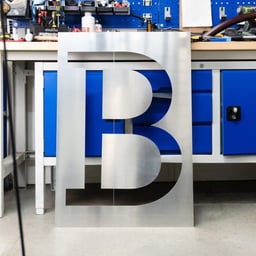
Studio Blackburn developed a bold typographic identity for Education Partnership North East, formed from the merger of three UK colleges. Each college received its own ultra-bold custom letter derived from Founders Grotesk, uniting them under a cohesive visual system. The design emphasizes individuality within a shared institutional identity.
The Brand Identity interviews Paul Blackburn, founder of Studio Blackburn, about the studio’s evolution, design philosophy, and notable branding projects including Trainline, Positive News, and UCL School of Management. Blackburn discusses the studio’s modernist approach, collaborative processes, and influences from designers like Wim Crouwel, Otl Aicher, and Kenya Hara. The conversation highlights Studio Blackburn’s focus on clarity, typographic precision, and meaningful simplicity in branding.