Neighborhood Identity for Marievik
Turning an office district into a neighborhood brand.
BAS ID developed the brand platform, concept, visual identity, and architectural program for Marievik’s transformation into a mixed-use Stockholm district. The work draws on the area’s playful postmodern heritage to foster openness, wellbeing, shared activity, and community across its nine commercial properties.
Insights
- AMF Fastigheter is converting Marievik — nine commercial properties at Liljeholmskajen — from an anonymous secondary office location into a mixed-use Stockholm neighbourhood, and BAS ID’s brief runs from the brand platform and visual identity to the architectural programme itself.
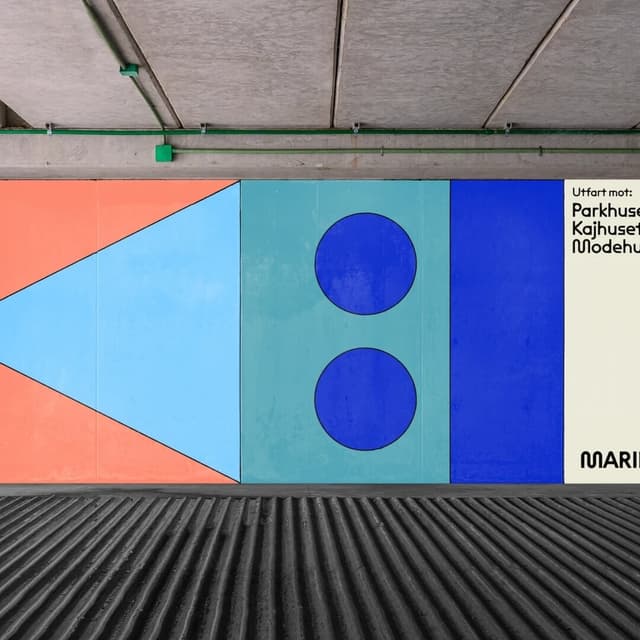
- Instead of hiding the district’s postmodernist architecture, the identity treats it as the asset: soft rounded letterforms, monoline strokes, and a geometric language BAS ID says is drawn from the meeting of water and buildings.
- The project goes far beyond a typical branding assignment: the scope includes property-specific positioning, tenant-mix strategy, communication strategy, wayfinding, and a concept-and-architecture manual — described by the client as a "kokbok" — a cookbook for urban life, architecture, content, and experience.
- The identity is built to work during construction: it gives residents and visitors a preview of the future Marievik while the district is still a building site, and makes that site more welcoming in the meantime.
- Mathias Lundeberg, design director at BAS ID, describes the method as distilling Marievik’s architectural elements into graphic forms — grounding the identity in the area’s geometric heritage while establishing a new expression.
- The development reaches past graphics: plans include cutting vehicle traffic and activating ground floors with cultural, health, retail and restaurant uses, with AMF Fastigheter’s Johan Lindskog framing the ambition as Marievik becoming an experience that grows with its people.
1 / 3Swipe
Keep exploring
Related cases